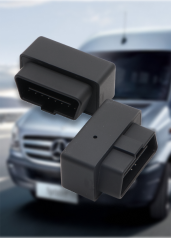
The dashboard light can go out while your car still has emissions tests to run. The Mercedes emissions drive cycle gives the onboard computer the conditions it needs to run those tests. Before a smog check, use OBDII readiness to see which monitors have completed and which still show incomplete.
What emissions readiness tells you
Scan tools read monitor status from the engine control module (ECM). When a monitor shows ready, the computer has completed its check. A failed test can still set a fault code. If the check engine light went out after you cleared the codes, some monitors may need to run again. The same can happen if the owner services the battery and disconnects it.
The catalyst monitor checks catalytic converter efficiency under specific conditions. Where it uses oxygen (O2) sensors for this check, the ECM reads their signals during monitoring. On cars with an evaporative monitor, fuel level and temperature can affect when the test runs. The computer may use a pressure sensor to track pressure changes in the fuel tank. A pressure reading alone cannot identify a bad sensor.
How to follow the drive cycle instructions
To complete drive cycle steps correctly, use the procedure the manufacturer provided for your specific car. Before performing the cycle, note whether it calls for a cold start and exactly when it requires normal operating temperature. If your scan tool labels a reading coolant temp, use it to check engine coolant temperature against the procedure. Some tests also depend on intake air temperature.
- Follow the specified cool-down period prior to a cold start. If the car uses a key, turn it to the ignition position called for at each step. Follow any idling requirement before you move off.
- On a suitable road, accelerate as directed. For a highway portion, check the speed in mph and any requirement to keep engine speed above a stated rpm. Follow any throttle limits during an increase in speed or a period of increased engine load. Hold a steady speed for the specified time, whether it calls for a minute or a longer interval.
- Release the throttle and decelerate where the procedure calls for it. Brake as needed for traffic. If traffic interrupts the sequence, check which steps to repeat before you perform the rest of the cycle.
Readiness tips before a smog check
After completing the sequence, scan again and compare the results with the prior reading. A drive cycle indicates progress toward a smog inspection when a previously incomplete monitor now shows ready. A car can be driven for many miles and still show an incomplete monitor if it never met the conditions for that test. Counting ignition cycles alone won’t tell you which tests ran.
Check two things after drive cycle completion. Look for incomplete monitors and any fault codes. If a monitor still isn’t ready, check whether you followed the wrong procedure or missed a required condition. If the same monitor stays incomplete after the correct procedure, use its status and any fault codes to guide emissions diagnostics.
Before making a smog appointment, check your state’s testing rules to ensure you know which readiness results it accepts for passing the inspection. If a certified technician already conducted the inspection and the car failed, review the station’s report to see whether it lists incomplete monitors, a fault, or both.
General drive cycle guidance before a smog inspection| Vehicle situation | Drive cycle or smog readiness check | Scanner outcome before smog inspection |
|---|
| Code clearing before smog testing | If you clear codes before a smog check, the vehicle may need another drive cycle. | After the drive cycle, the vehicle scan may display an incomplete monitor or a returning code relevant to smog testing. |
|---|
| Battery reconnect before smog testing | If the vehicle scan shows a readiness reset, follow the recommended drive cycle. | After the drive, the vehicle scan may show incomplete monitor tests relevant to smog readiness. |
|---|
| Cold start before a smog check | Before a cold-start drive cycle, compare coolant temperature with the vehicle’s specified range. | If you started outside that range, the vehicle scan may show an incomplete monitor after the drive cycle at the smog check. |
|---|
| Steady cruise before smog testing | For a steady-speed drive cycle step, choose an open road where you can safely drive at the specified speed. | The vehicle scan after the drive cycle may show a change in monitor status before the smog check. |
|---|
| Drive cycle traffic interruption before smog testing | Park and check the vehicle procedure for drive cycle steps to repeat when you try again. | After the drive, the vehicle’s smog readiness scan may still show an incomplete monitor. |
|---|
| Short trip before a smog check | A warm vehicle can still miss drive cycle conditions for a monitor. | Compare any incomplete monitor on the vehicle scan after the drive cycle with state smog rules. |
|---|
| Incomplete monitor or failed test before smog testing | An incomplete monitor may need a drive cycle. If a test failed, scan the vehicle for fault codes. | The vehicle’s smog readiness scan after the drive cycle shows monitor status and any fault codes found. |
|---|
| Light off before smog testing | The vehicle may still need a drive cycle to run a monitor for the smog check. | The vehicle scan after the drive cycle may still show an incomplete monitor for smog testing. |
|---|
| Smog readiness between trips | Scan the vehicle after each drive cycle trip. | The vehicle scan may show a monitor change from incomplete to ready across drive cycle trips. Compare monitor status before the smog check. |
|---|
| Incomplete evaporative monitor before smog testing | Check the vehicle’s drive cycle fuel level limits for the evaporative monitor. | The scan after the cycle may still show an incomplete monitor before the smog check. |
|---|
OBDtune is a handheld OBD tool that can suppress certain dashboard warnings on supported Mercedes-Benz diesel vehicles. The car still needs to run its monitor tests to establish readiness. Any failed component still needs repair.