Soot deposits and coolant loss call for different decisions before anyone removes a cooler. Sprinter EGR cooler cleaning addresses removable deposits in the exhaust passages; it does not repair a cracked core or a leaking joint. We distinguish EGR cooler cleaning, EGR cooler or EGR valve repair and dashboard error suppression because each changes something different. A clean EGR cooler does not establish that the EGR valve is clean or in good condition.
Decide whether cleaning fits the problem
A dirty, sooty passage can restrict exhaust flow, but visible soot alone does not establish that deposits are blocking the cooler enough to cause a fault. A dashboard warning light also does not identify a failed part, whether the EGR cooler or EGR valve. Confirm the cause before treating cooler cleaning as the remedy.
The EGR cooler transfers heat from recirculated engine exhaust to coolant. Deposits can interfere with that heat transfer or restrict passages. Cleaning may remove accessible EGR cooler deposits, but it cannot restore damaged metal or seal internal leaks. If the EGR cooler cannot meet its specified condition after cleaning, replace it rather than repeat a soak indefinitely.
Mercedes-Benz Sprinter engines can use different cooler arrangements. For individual Sprinters, identify the installed EGR cooler assembly on the van and follow its removal instructions. An NCV3 designation alone does not identify that assembly. The access route, pipe connections, hose connections and clearance around a turbo depend on the configuration; do not assume that one guide covers every vehicle.
Prepare for removal
For DIY maintenance, first establish whether the vehicle-specific EGR cooler cleaning procedure and available equipment allow safe removal. Let the engine and cooling system cool fully. Never open a hot, pressurized coolant connection. Collect drained coolant as the EGR cooler procedure requires and keep it separate from spent cleaning liquid.
- Record each pipe, hose and tube connection before disconnecting it.
- Protect open connections from dirt throughout removal and cleaning, and prevent cleaning liquid from entering components that remain installed.
- Check the required seals and gaskets, bolt sequence and tightening specifications before starting EGR cooler cleaning.
Release fasteners using the specified method. Do not pull or force the EGR cooler free while a connection or bracket still holds it. Keep track of the bolts and their positions during cleaning; follow any instruction to replace single-use fasteners during reassembly.
Clean the cooler without damaging it
Choose a cleaner that explicitly suits the EGR cooler materials and the intended cleaning method, including any spray application. A product labeled biodegradable does not automatically suit metal alloys, coatings or seals. Do not assume that carburetor cleaner, also called carb cleaner, suits an EGR cooler or EGR valve simply because it can clean an EGR valve by removing carbon.
Follow the approved EGR cooler cleaning procedure for the removed assembly. Apply cleaning liquid only to the EGR cooler passages that the procedure permits. Respect the specified soak time and temperature; a longer soak does not guarantee a better result. Avoid scraping thin internal surfaces or forcing tools into passages.
- Remove loosened deposits that come free using the approved method, without driving debris into inaccessible passages.
- Use water for rinsing only when the cleaner instructions and cooler procedure permit it.
- Keep cooler flushing pressure within the specified limit and complete the required draining and drying steps.
A thorough rinse, where permitted, removes loosened residue and remaining cleaner. An apparently clean opening does not prove that every internal passage is clean and clear or that the cooler is leak-free. A clean EGR cooler passage also says nothing about EGR valve condition. Check the cleaned EGR cooler assembly using the vehicle-specific inspection and test procedure before installation.
Limits of EGR cooler cleaning| Observation | What it does not prove |
|---|
| Clean EGR cooler exhaust passages | A clean EGR valve. |
| Cleaning liquid drains clear after passages are flushed | An EGR valve free of deposits. |
| Clean EGR cooler exterior | A clean, working EGR valve, clean valve passages or an engine without a coolant leak. |
| Reassembled, clean EGR cooler connections | EGR valve operation with the engine running; use the specified valve checks. |
| Dashboard light clears after cleaning | EGR valve condition or safe engine operation after EGR cooler cleaning. |
Reinstall the EGR cooler with the specified cooler seals and fasteners for that engine. Refill and bleed the engine coolant circuit according to the vehicle instructions, then check for leaks under the prescribed conditions. Do not treat a cleared warning as proof that the work succeeded. Confirm the repair through the required checks, and resolve any coolant loss before returning the vehicle to use.
What the OBDtune tool changes
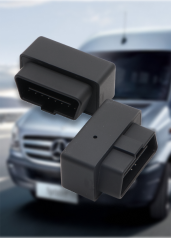
OBDtune is our hand-held OBD tool for supported Mercedes-Benz diesel configurations. Its supported EGR software functions can suppress related dashboard errors without requiring physical removal or replacement of the affected components. Confirm compatibility with the exact vehicle and intended function before use.
For a supported configuration, connect the tool to the OBD port, select the supported script through COMAND or the vehicle media screen, wait for completion and disconnect the tool. The screen selects scripts; it does not establish the mechanical condition of the cooler or EGR valve.
Error suppression does not clean cooler or EGR valve deposits, repair leaks or establish safe driving. A damaged cooler still needs mechanical attention even if the dashboard stops displaying an error. Assess the cooler and EGR valve condition first when deciding whether cleaning, replacement or a supported software change addresses the intended engine problem.