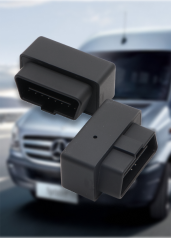
A dashboard warning alone does not identify a failed EGR component. For Mercedes Benz owners considering OM642 EGR delete, the first distinction is between software changes and physical removal. OBDtune supplies a hand-held OBD tool for supported Mercedes-Benz diesel applications. Its supported EGR software can suppress associated errors and restrictions without requiring components to be removed in many cases. Error suppression does not repair a failed part or establish safe driving.
What changes when EGR is disabled
EGR controls the flow of exhaust gases back into intake air. Returning some exhaust back to the intake changes combustion conditions. The system recirculates part of what the engine exhausts; software deactivation changes its control strategy. A valve delete may describe software that leaves hardware installed or a physical modification. Confirm which meaning applies before choosing a solution.
On Mercedes OM642 V6 engines, the exact controller and vehicle configuration matter. CRD wording in a listing does not prove that a tool is compatible. The same caution applies to other diesels: an engine designation alone cannot confirm support. A warning, smoke or limp mode does not establish which EGR part failed. Valves, sensors and their connections require assessment appropriate to the actual fault. On configurations with an EGR cooler, software cannot repair a coolant leak.
Hardware deletion and software are different choices
A hardware kit may contain plates that block an EGR passage. Other kits may use a stainless delete pipe or replacement tubing. These are physical modifications, and their contents vary. Replacement pipes can change connections to the manifolds; bolts, a hose or an adapter must match the intended fitment. OBDtune sells the OBD tool, not these hardware parts.
An EGR system described as deleted may still have its original components installed. Ask whether the description means software was changed, hardware was removed, or both. Leaving parts installed avoids that removal work, but it does not restore their mechanical condition or guarantee reliability. An EGR description also does not establish support for a separate flap function.
Understanding tune and flash terminology
Labels such as delete tune and flash delete do not establish exactly what a tuner changed. Reprogramming can alter the engine management calibration, so confirm the intended EGR behavior and the supported ECU version. ECM is another term used for the engine controller. A vehicle described as tuned does not automatically match a particular script.
- Check which EGR functions the software will disable and which related errors it addresses.
- Note any existing modifications before confirming compatibility.
- Do not treat claimed power, torque, horsepower or efficiency gains as guaranteed results of EGR deletion.
The search phrase bench flash delete tuning concerns a different controller connection method. A bench-flash procedure is not the OBD workflow described below. The word flash alone does not identify the connection method, software content or compatibility.
Using the supported OBDtune EGR option
Confirm support for the vehicle and its EGR configuration before proceeding. OBDtune communicates with the ECU through the OBD connection. The media screen selects supported scripts; it does not serve as a fault-code reader or live-data display.
- Connect the tool to the OBD port.
- Select the supported EGR script through COMAND or the multimedia screen.
- Wait for the process to finish, then disconnect the tool.
Where an audio screen is absent, supported option selection can use microSD cards. The supplied software can be returned to the factory state for diagnosis or repair. That reversibility does not correct an existing mechanical defect. Avoiding immediate removal work may reduce downtime, but a damaged component can still require repair.
Keep the EGR scope clear
Searches for full delete often imply a broader package, while turbo resonator delete and Sprinter DPF delete describe different work. Those phrases do not define the EGR option on this page. Confirm the specific EGR changes instead of assuming that a broad search label describes the supplied software. Do not assume that error suppression makes a vehicle suitable for public-road use.