Find matching DEF, DPF, EGR, and AdBlue warnings
View prices and available package options
Plug-in programming with no tools or laptop required
Stage 1 tuning, DPF Delete, and additional features
Step-by-step ordering process
Worldwide shipping information
Available payment options
Multi-vehicle pricing and upgrade options
Answers before and after purchase
What to choose, how it works and features
Installation, usage and troubleshooting
Technical articles and guides
DPF error
AdBlue error
DEF error
EGR error


A diesel can use more fuel on the same route when it runs an active regeneration. So, does DPF delete increase MPG? It can in some cases. The potential gain depends on how much the filter restricts exhaust flow, how often the vehicle runs active regeneration, and how you drive.
DPFs trap carbon-rich soot from combustion. Soot buildup increases the pressure drop across the filter. At a given load, excessive backpressure downstream of the turbo can make the engine work harder to push exhaust gases through the filter. Removing a heavily restricted filter can reduce that pumping work and improve fuel efficiency. Cleaner filters in good condition leave less room for gains from reduced restriction.
Some diesel engines use extra fuel during an active regen to raise exhaust temperatures and burn off soot. The filter can also burn off soot passively when the exhaust gets hot enough. Short trips can interrupt active regens. Sustained driving at highway speeds can give them time to finish.
Reports of improved fuel mileage from DPF deletes can reflect more than one change. A tuner may also change power delivery or throttle response. Throttle feel alone tells you little about what MPG to expect. If you see the search wording “delete DPF delete,” find out whether someone removed the filter or deleted DPF functions in software before using the claim to estimate fuel savings.
For a real-world fuel economy comparison, divide total miles driven by total gallons added over several full fill-ups. Account for important factors that can change fuel consumption between runs.
| Scenario | What can affect the result |
|---|---|
| Physical DPF delete versus software DPF delete | Kits that replace the filter with a pipe remove the restriction the filter created. A software-only delete leaves that restriction in place, which matters when comparing MPG across delete types. |
| Physical DPF delete with poor exhaust flow through a heavily restricted filter | If the delete reduces backpressure, the engine can use less fuel to push exhaust out. MPG can improve under the same load after the delete. |
| Physical DPF delete with a clean filter | Low restriction before the delete leaves less scope for reducing pumping work, cutting fuel use and improving MPG after the delete. |
| Software DPF delete that stops active regeneration | When a delete stops active regeneration, it also stops the extra fuel use from those events. How often they occurred before the delete affects the potential MPG gain, since frequent events can account for a larger share of fuel use. |
| Software delete with the filter still in place | Soot can still collect if the delete stops active regeneration. Increased restriction as soot accumulates can offset early fuel savings and an MPG gain after the delete. |
| When “software delete” means warning suppression | A clear dashboard after a software DPF delete can reflect warning suppression alone. For an MPG claim about the delete, the key question is whether the delete changed filter restriction or the fuel used during active regeneration. |
| MPG after a delete plus a power tune | Combined modifications, including power tunes and other upgrades, can change turbo boost, horsepower or torque. That makes it harder to isolate the effect of the delete on MPG in tuned trucks. |
| Same route before and after a delete | Drivers should match road speed and load on that route for a proper MPG comparison. Maintaining similar driving habits, from light to aggressive acceleration, limits what changes alongside the delete. |
| Heavy towing before a delete, unloaded driving afterward | The lighter load after the delete can reduce fuel use on its own. Higher MPG at lighter loads can overstate the effect of the delete. |
| Stop-and-go trips before a delete, steady highway trips afterward | Steady driving after the delete can use fuel more efficiently than repeated stops and acceleration. The MPG difference can come from the route as well as the delete. |
| Cold-weather MPG before a delete, milder weather afterward | Cooler air can mean higher fuel use on short trips. Compare trips in similar weather conditions when judging the effect of the delete. |
| MPG from one fill-up before a delete and one afterward | A difference of a gallon in fill level can skew the MPG estimate based on a single tank on either side of a delete. Several full fill-ups on each side of the delete reduce the risk of a misleading estimate. |
| Dashboard MPG before and after a software delete | A dashboard MPG reading after a delete is an estimate. Comparing full fill-ups helps show whether fuel use actually changed after the delete. |
| Published MPG report for two trucks after a delete | Reported MPG improvements after a delete may reflect one truck’s starting restriction or regeneration frequency. The other truck can respond differently to a delete. To compare the size of the improvement, use each truck’s own baseline. |
| MPG on repeat trips before and after a delete | If MPG figures after the delete fit within the usual range for comparable trips, the result offers little evidence that the delete significantly reduced fuel use. |
An owner can use the measured change in MPG after a delete to estimate fuel savings. Include maintenance costs when comparing total operating costs to decide whether the change is worth it. Check general road-use regulations and local emissions rules before making changes to the emissions system.
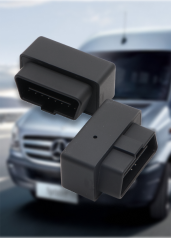
The OBDtune kit is a handheld tool designed for supported Mercedes-Benz diesel vehicles. On compatible DPF configurations, it can suppress certain dashboard warnings with the filter in place. A restricted filter or failed part can still affect vehicle operation after the warning clears.
SCR total delete – no longer necessary to repair the SCR system and refill the AdBlue fluid
Removes Check Engine error
Removes 0 Remaining Starts error
Removes Starts idle error
Removes Check AdBlue error
Ability to roll back to factory settings
Maintains the dealer warranty
Easy pass emissions test ability
We suggest deleting all of the following components together (SCR, EGR, Flaps and DPF) as all of these elements work together as one system
Disables SCR (DEF) system on equipped vehicles
Disables Swirl Flaps in the intake manifold
Optionally disables Diesel Particulate Filter
Disables EGR valve
Ability to roll back to factory settings
Maintains the dealer warranty
Easy pass emissions test ability
Temporary solution – start the engine and drive to workshop without limitations but the SCR still needs to be repaired
Ability to reset engine starts
counter as many times as needed
SCR system continues to work
Absolutely legal
Maintains the dealer warranty