A persistent particulate-filter warning raises questions about both the filter and the software that controls it. A Mercedes DPF delete can refer to software changes, physical filter removal or both. We distinguish these actions because suppressing a dashboard error does not repair the condition behind it.
What DPF delete wording means
In DPF-related listings, straight pipe usually refers to exhaust hardware fitted in place of the filter. A delete exhaust system describes a hardware change, while delete tuning concerns ECU software. The phrase delete kit tuning may combine these ideas, so check what a kit includes. Hardware kits and software tools do not perform the same task.
The wording complete DPF delete does not establish a standard scope. Check whether a description concerns filter removal, code changes or suppression of particular errors. If a listing uses tuner or tunes, establish whether it describes warning suppression or a performance calibration.
| A software delete kit changes code. | For a Mercedes engine, establish whether delete tuning suppresses specified errors while retaining the exhaust filter; the kit label alone does not confirm that scope. |
| A hardware delete kit concerns a physical exhaust conversion. | An exhaust conversion and delete tuning are separate actions. Confirm whether a delete description includes physical removal, software tuning or both. |
| A combined delete kit description needs separate hardware and tuning details. | For a Mercedes engine, a delete kit title does not establish which exhaust parts change or which errors the tuning addresses. |
| A performance tuning description does not define the scope of a delete. | Keep performance tuning claims separate from warning suppression when comparing delete options. |
| The price of DPF software for Mercedes Benz does not establish compatibility. | Confirm the supported vehicle configuration and relevant error codes; the price alone does not identify which codes a script addresses. |
| For Mercedes Benz, the price needs a clear description of the supplied scope. | No replacement pipe, filter hardware or hardware kits accompany the OBDtune tool. |
| For Mercedes Benz, its price is not evidence of power output. | A disappearing warning does not measure power or prove a power gain. |
| For Mercedes, assess any power claim separately. | Warning suppression alone cannot substantiate increased power. |
| Select DPF scripts for the individual Mercedes-Benz model and engine type. | A delete kit label does not confirm compatibility with that configuration. |
| For another model or engine, reassess the delete scope; the kit name alone does not establish support. | Neither a delete label nor compatibility establishes performance; delete scope and performance claims need separate evidence. |
The role of the OBDtune tool
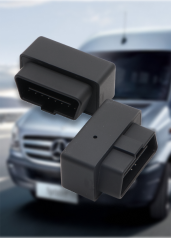
OBDtune is a hand-held, plug-and-play OBD tool for supported Mercedes-Benz diesel vehicles. The tool sold in our store is designed to apply supported scripts. Its DPF script is intended to suppress relevant dashboard errors and associated restrictions without generally requiring removal or replacement of the filter. Confirm DPF availability and the script’s scope for the specific vehicle before you select it.
- Instructions: connect the tool to the vehicle’s OBD port.
- Select the supported script through the COMAND or multimedia screen.
- Wait for completion, then disconnect the tool.
Where no audio screen is available, supported options can be selected using microSD cards. The screen serves to select scripts; it does not establish the cause of a warning. The supplied software can be returned to the factory state for diagnosis or repair.
Confirm compatibility before selecting software
Check Mercedes-Benz models and engines individually. A matching connector, model year or vehicle type does not establish compatibility. A Mercedes van and a passenger car can require different code for engines, and body style alone does not confirm fit. Do not skip the compatibility check because another vehicle uses a similar engine. A useful compatibility note identifies the vehicle configuration and the supported DPF option to select. Confirm the exact Mercedes engine configuration against the supported script rather than treating a Mercedes badge as approval for every engine. For an individual engine, a delete option must match the supported scope for engines. A Mercedes engine with similar naming does not establish that another Mercedes engine accepts the same delete tuning.
Before you select DPF tuning, confirm whether the proposed change leaves the physical exhaust filter installed and which errors or restrictions it addresses. Keeping components in place can avoid the removal work associated with a hardware conversion, but it does not establish that the filter remains serviceable.
What error suppression leaves unresolved
The DPF traps soot, and regeneration burns accumulated soot under suitable operating conditions. Software that suppresses errors does not remove soot or ash, repair sensors or restore a damaged filter. A warning alone does not identify a failed part, and an old warning message does not prove that the fault has disappeared. Where loading data are available, a low reported value alone does not establish filter condition.
Do not infer an increase in power, improved fuel economy, fuel savings or better diesel performance from warning suppression. Claims about turbo response or air flow through intakes also require evidence beyond a dashboard error disappearing. Suppressed warnings do not demonstrate reliability or establish that continued driving is safe. A delete tuning label does not by itself establish a performance gain; a delete description that mentions tuning still needs evidence for any performance claim.
Do not assume that a change is permitted on public roads. Applicable emissions requirements and the vehicle’s intended use still matter. Choose it only after confirming compatibility, its exact scope and the condition of the retained filter.