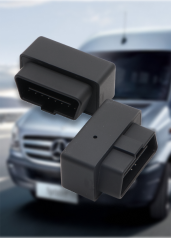
A dashboard warning and a decision to remove exhaust hardware call for different responses. Sprinter DPF removal can mean physical removal of the filter, a software change, or both. For a Mercedes-Benz diesel van, establish the intended scope before choosing a kit. OBDtune offers a hand-held OBD tool that helps suppress supported DPF-related errors and restrictions without requiring removal or replacement of components in most supported cases.
Hardware removal and software changes
The DPF captures soot in the exhaust. Physical removal changes the exhaust assembly; a straight pipe replaces the filter section. Software changes affect electronic control or fault handling. A pipe alone does not change the ECU software, and suppressing a warning does not remove a physical block in the filter. Hardware kits require separate physical fitment checks; software compatibility does not establish pipe fitment. These distinctions matter when deciding whether to retain the existing hardware.
Search wording such as “complete DPF delete exhaust”, “Rawtek DPF delete” and “exhaust tuning” can refer to different combinations of hardware and software. Those phrases do not specify what an OBDtune purchase includes. Our tool is sold without exhaust components or accompanying products. The phrase “AdBlue delete exhaust system” also describes a different scope; it does not define a DPF-only change.
What a DPF warning can establish
A warning or visual inspection alone cannot identify a failed part. Note the current fault codes and any related fault before deciding what action fits the vehicle. An old filter is not automatically defective, and a small warning message does not measure the severity of a failure. Operating conditions and accumulated miles alone do not establish the cause either.
A DPF warning does not prove that sensors or a turbo have failed. References to air flow, an injector or NOx also need their correct technical context; they do not automatically establish that DPF removal addresses the problem. Keep the decision focused on the confirmed DPF issue rather than attributing every dashboard message to the filter.
A good assessment separates the warning state from the physical condition of the filter. Clearing or suppressing fault codes does not repair damaged hardware or establish reliability. Do not skip an unresolved restriction or warnings due to physical restrictions simply because the dashboard message disappears: retained hardware still needs appropriate attention.
How the OBDtune tool is used
The tool uses the vehicle’s OBD connection to interact with the ECU. The application process includes these steps, subject to confirmed support for the vehicle and selected DPF function:
- Connect the tool to the OBD port.
- Select the supported script through the COMAND or media screen. Where no audio screen is available, supported option selection can use microSD cards.
- Wait for completion, then disconnect the tool.
The media screen selects supported scripts; it is not a fault-code reader or live-data display supplied by OBDtune. The provided software can return to the factory state for subsequent diagnosis or repair. Retaining the filter avoids physical removal, but software reversibility does not establish the condition of any component.
Compatibility and expected results
Different diesel engines, ECU versions and exhaust design can affect whether a particular function applies. Confirm support for the exact Mercedes-Benz Sprinter configuration before use. A Freightliner badge does not establish compatibility; the stated product support covers Mercedes-Benz diesel applications. A model name or a listed year range alone does not confirm every vehicle combination. Across Sprinter models, the exact supported DPF function must match the vehicle; a tuner label alone establishes neither compatibility nor a performance change.
DPF error suppression does not promise added power, extra torque, an increase in fuel economy or improved mechanical reliability. Performance tunes have a separate scope and should not be inferred from a DPF script. A lot of highway driving does not prove that a filter is healthy, and a clear dashboard does not establish safe driving. Applicable emissions rules also govern whether a change is permitted for public-road use; there is no universal legality promise. Retaining hardware does not exempt a change from rules for public roads.